
Home › Betting Strategy › Are Tipsters Worth It?
By The Guv'nor · Last updated October 2026
Are horse racing tipsters worth it? Only when the maths works. A paid tipster earns his fee if his long-run profit, at the stakes you actually bet, covers the subscription with room to spare, if he backs his own tips, and if his record is long enough to mean something. Check all three before you hand over a penny.
Are horse racing tipsters worth it? Only if the maths works
Look, I'm a tipster, so you'd expect me to say yes. But before all this I was a Quantitative Researcher at a Tier 1 investment bank in the UK, which makes me essentially a statistics/maths geek, and the maths doesn't care who's selling.
A paid tipster is a cost, the same as the bookie's margin. The only question is whether his tips make you more than they cost you, over a period long enough to trust. So let's do the maths.
Break-even maths: £9.99 a month vs a £45-a-month service
Stop thinking about the fee in pounds and start thinking about it in points. I'm strict about points staking: divide your bank into points, so 1pt might be £5 on a £100 bank (my guide to what 1pt means in betting covers how to set yours). Once you do that, a subscription becomes a number of points you have to win back every month before you're actually in front.
At £5 a point, a tenner a month is 2 points. A dearer service at, say, £45 a month is 9 points.
Subscription break-even table
The table below is a worked example, not anybody's results. It assumes you stake 60 points a month in total (about two points a day), which is a round number I've picked to make the maths easy. Change your point size or your monthly volume and the hurdle moves with it.
| Your point size | £9.99 a month in points | ROI needed to cover £9.99 | £45 a month in points | ROI needed to cover £45 |
|---|---|---|---|---|
| £2 | 5.0pts | 8.3% | 22.5pts | 37.5% |
| £5 | 2.0pts | 3.3% | 9.0pts | 15.0% |
| £10 | 1.0pt | 1.7% | 4.5pts | 7.5% |
| £20 | 0.5pt | 0.8% | 2.25pts | 3.8% |
How to read it: if you bet £5 a point and stake 60 points a month, the £45 service has to return 15% on everything you stake before you make a single penny. Over a big sample that's a serious ask for anyone. The £9.99 one needs 3.3%.
The bigger you stake, the less the fee matters. If you're betting £2 a point, even my tenner a month is 5 points, so be honest with yourself about your stakes before you sign up to anything.
Strike rate vs profit: why 60% winners can still lose you money
The most common sales line in tipping is a high strike rate. Anyone can talk about high win rates when they tip odds-on horses all day. The question is what you're actually winning profit-wise, and the answer is often nothing.
Here's a worked example. A tipster gives 100 bets at 1pt each, all at 1/2, and 60 of them win. Sounds brilliant. Each winner returns 1.5pts, so 60 winners return 90pts. You staked 100pts. You're 10pts down, a loss of 10%, with a "60% strike rate" plastered all over the website.
Now flip it: 100 bets at 1pt, all at 5/1, and only 20 win. Each winner returns 6pts, so that's 120pts back for 100 staked: 20pts up, a 20% profit, with a strike rate most people would laugh at.
The number that tells you whether a price can pay is the break-even strike rate, which is just 1 divided by the decimal odds:
- Evens (2.0): you need to win 50% of the time to break even.
- 2/1 (3.0): 33.3%.
- 5/1 (6.0): 16.7%.
- 8/1 (9.0): 11.1%.
A strike rate means nothing until you put it next to the prices. That's why I like outsiders and each-way value. Take a worked example: 1pt each-way at 12/1 with one-fifth place terms costs 2pts. If the horse only places, the place half returns 3.4pts, so you're 1.4pts up on a losing horse. Two points on a 1/2 shot that actually wins makes you 1pt. Even when they place we make more profit than an odds-on shot winning.
The whole idea of backing horses at bigger prices than they should be is in my guide to value betting in horse racing.
What is a good ROI in betting?
ROI (return on investment) is your profit divided by the total you staked. Make 20pts profit from 200pts staked and your ROI is 10%.
I'm not going to give you a magic number, because the honest answer is that a "good" ROI depends on how many bets it's built on and what prices they were at. A 30% ROI from 40 bets at big prices tells you very little. A small positive ROI held over a couple of thousand bets is far more impressive, because luck has had nowhere to hide.
Sample size: why a good week means nothing and a good year means something
Racing results are noisy, and the bigger the prices, the noisier they get. So I worked out how often a tipster shows a profit purely by luck. I took two imaginary tipsters with level 1pt stakes: one who genuinely loses 10% of everything staked over time (think of someone with no real edge, slowly paying the bookie's margin), and one who genuinely wins 10%. Then I calculated the chance each one is showing a profit after a given number of bets, with every bet at 2/1 or every bet at 8/1.
| Bets tipped | 2/1, true ROI -10% | 2/1, true ROI +10% | 8/1, true ROI -10% | 8/1, true ROI +10% |
|---|---|---|---|---|
| 20 | 39.2% | 64.3% | 32.3% | 44.9% |
| 50 | 31.6% | 70.1% | 38.4% | 58.4% |
| 100 | 22.1% | 74.3% | 29.7% | 57.3% |
| 250 | 12.1% | 85.8% | 29.2% | 71.7% |
| 500 | 5.5% | 94.2% | 20.4% | 77.6% |
| 1,000 | 1.1% | 98.6% | 11.4% | 85.0% |
| 2,000 | 0.1% | 99.9% | 4.8% | 93.4% |
Method: these are probabilities from the binomial distribution, not real tipsters' results. Every bet is assumed to be at exactly that price. Win chance per bet = (1 + true ROI) ÷ decimal odds, so 30% and 36.7% at 2/1, and 10% and 12.2% at 8/1. "In profit" means total returns above total stakes. I checked four cells against a Monte Carlo simulation and they matched to within 0.1 percentage points. The figures wobble at small sample sizes because winners only come in whole numbers.
Look at the 8/1 columns. After 100 bets, a tipster who loses you money in the long run is in profit nearly three times in ten. After 250 bets it's still nearly three in ten. Meanwhile a genuinely good tipster at those prices is underwater more than four times in ten after 100 bets. Crazy right?
Another way to see it: at 8/1, one standard deviation of luck on ROI is about 27 percentage points after 100 bets and about 8.5 after 1,000. At 2/1 it's about 14 after 100 and about 4.3 after 1,000. So a tipster boasting +25% from 100 bets at big prices could well be a -10% tipster on a good run: by the same binomial maths, a -10% tipster at 8/1 shows +25% or better after 100 bets about one time in eight.
So a good week, or even a good month, tells you almost nothing about a tipster who likes a price. A year of every tip, price and stake recorded starts to mean something, and the bigger his average price, the longer you need to wait before you believe it either way.
The flip side is that good tipsters have long losing runs too. I've put the numbers on that in my staking plans for horse racing guide, and it's the main reason strict points staking matters. Understanding that losers are a thing is the key to being a winner longer term.
How to spot a fraudster: anyone guaranteeing winners
I've said it before and I'll keep saying it: I can't guarantee every tip every day is going to win, and anyone that can is a fraudster. If you're looking for some holy grail that wins 100% of the time, it doesn't exist.
So how do you tell if a tipster is fake? These are the checks I'd run:
- Any guarantee. "Guaranteed winners", "can't lose", "100% strike rate". Walk away.
- A strike rate with no prices next to it. As above, 60% winners at short prices can be a losing record.
- No losing days, ever. Every honest tipster has stinky days. If the record has none, it isn't the whole record.
- Stakes that change after the result. Profit should be quoted in points at the advised stake, set before the race, not "if you'd had a tenner on the winners".
- Prices you could never get. If every winner is quoted at the best price available at some odd hour, ask when the tip was actually sent.
- Asking for your money to bet with. Never hand anyone your betting bank. Giving tips doesn't on its own make someone a licensed betting business (see the FAQs below), so don't assume anybody has vetted a tips service the way your bookie is vetted.
The same goes for anything sold as an AI system that can't lose. Software is only as good as its maths and its prices, and I've given my honest verdict on AI horse racing predictions separately.
Does your tipster bet his own tips?
This is the question I'd ask any tipster before paying him. Some tipping sites earn money from bookmaker sign-up links. That isn't automatically dodgy, but it means the site gets paid whether you win or lose.
A tipster who backs his own selections has the same interest as you. When he's wrong, it costs him too. And if he's genuinely good, the bookies will have noticed. Bookmakers restrict accounts that win, which is why most of your favourite bookies won't take a bet from me. A tipster who's been restricted and can show it is telling you something a results table can't. I've written about why bookies restrict winning accounts from the wrong end of it.
How I run my own tips, so you can judge me the same way
If I am honest, I wrote this page partly so you'd hold me to it. Every horse I tip, I'm betting on myself, and I judge myself on profit month to month, not on win rate.
A typical day has a 'Banker' or two (shorter-priced bets I rate as solid) and some outsiders. Those outsiders come from a new but proven system that picks out horses that have won or come close at a weight or mark higher than they're running off today. When I've got stable information from the trainers of horses I own, or 'smart money' moving in the market, members get that too.
Some days there's nothing good enough to tip, and on those days I don't send any. That's just a stinky day for the ponies. And if there's a tip you're not sure about, skip it. I think of the newsletter as a short list for your betting of the day, not orders.
Don't chase, and don't wake up fancying one a bit more and go all in on a feeling. Trust the process over a long enough run, and judge my tips service on the same tests I've given you above.
That's how to judge a tipster – now judge me.
Price
Price of the service is a fixed £9.99 monthly and that will never change and you can cancel anytime if it's not for you. To break that down for you that's about 32p a day for a whole month or a going to have a McDonalds with a mate. Crazy right?
I've priced it cheap because I want it accessible to absolutely everyone and build a community of winners - If I am honest the £9.99 is just there as a filter if you like so that only serious people sign up. If the paid version isn't for you just yet, then feel free to sign up to the free service.
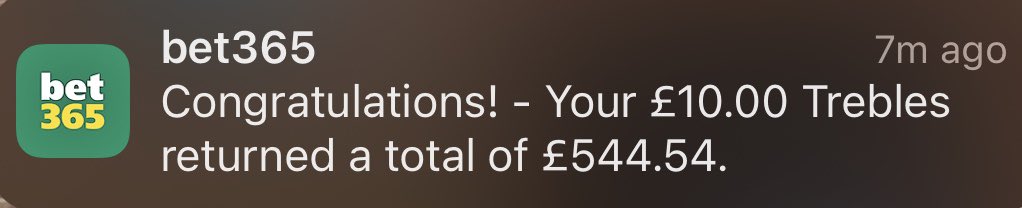
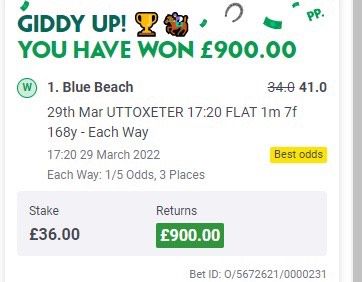
My promise.
Look, I can't guarantee every tip every day is going to win (anyone that can is a fraudster). But I can promise you that every horse I will tip I am betting on myself and through my data analysis techniques it should be in with a very strong chance of bolting up and winning and over a long enough period you will be profitable.
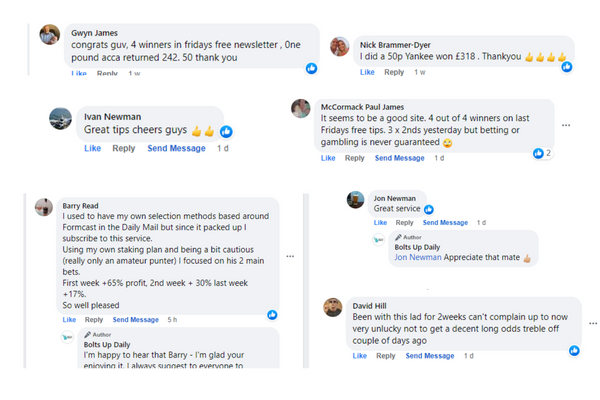
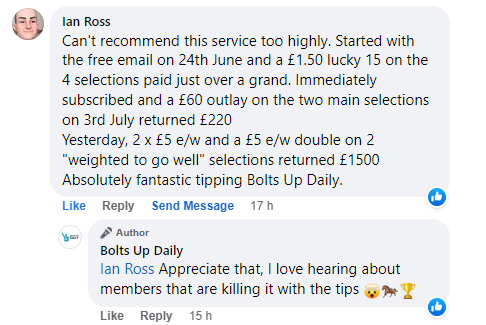
Here's what some of our paid members have been saying:
Give it a go, what have you got to lose? It's only a tenner a month. Feel free to try out the free version first!
- The Guv'nor
Questions people ask about paid tipsters
Are paid tipsters worth it compared with free tips?
Free tips cost you nothing in fees, so they only have to beat the bookie's margin. Paid tips have to beat the margin and the fee. A paid tipster is worth it when his long-run profit in points, at your stake size, comfortably clears his fee in points.
How many bets do you need to judge a tipster?
More than you'd think. At average prices around 8/1, a tipster who loses 10% long-term still shows a profit about 29% of the time after 250 bets, according to the binomial maths above. Several hundred bets is a minimum at shorter prices, and you want more for an outsider tipster.
Do tipsters need a licence in the UK?
Giving tips on its own isn't the issue. The Gambling Commission's betting guidance says providing tips in a newspaper isn't enough to make you a betting intermediary, but a tipster service that places bets on behalf of other people for payment or commission is one.
Who is the best paid horse racing tipster?
I'm not going to rank myself, and you shouldn't trust anyone who ranks themselves first either. Judge any paid horse racing tipster on profit in points over a big sample, whether he bets his own tips, and whether the fee makes sense at your stakes.
More in this guide
- Horse racing betting strategy: my 10 rules as an ex-quant
- Can you make a living betting on horses?
- What 1pt means in betting, and how to size your points
- Value betting in horse racing
- Staking plans for horse racing, tested by simulation
I run Bolts Up Daily. I was a Quantitative Researcher at a Tier 1 Investment Bank (essentially a statistics and maths geek), and I now use those skills to analyse UK and Irish racing, profitably enough that most of your favourite bookies won't take a bet from me. Every horse I tip, I'm betting on myself, and every bet comes with a stake in points. I own racehorses too. Look, I can't guarantee every tip is going to win (anyone that can is a fraudster), but I care about profit, not strike rate.
More from The Guv'nor · How my tips service works